Tiny Love Font: A Playful, Polished Touch for Small Business Branding
It was 3 p.m. on a Tuesday—coffee lukewarm, label printer humming—and I was tweaking the final version of my client’s new candle jar labels. She’d launched six months ago with handwritten tags and free Google Fonts, and her products were selling well—but something felt off. Customers loved the scents, the packaging, even the Instagram aesthetic… yet the brand still didn’t *feel* cohesive. That’s when we swapped out the generic display font and tried Tiny Love. Within an hour, the whole vibe shifted: softer, more intentional, unmistakably hers.
What Tiny Love Really Brings to Your Brand
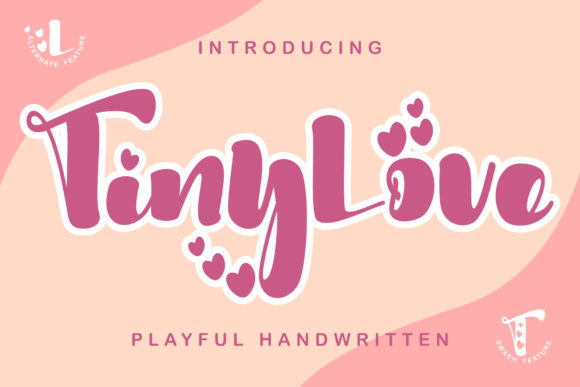
Tiny Love isn’t just another decorative font—it’s a display font with personality. Think of it as the friendly, slightly whimsical friend who shows up to your branding session wearing perfectly coordinated earrings and a smile that puts everyone at ease. Its curves are gentle but deliberate, its spacing open and airy, and its rhythm feels both joyful and grounded. It’s playful without being childish, romantic without being fussy, and elegant without demanding attention. As a creative consultant, I’ve seen how much a single typeface can influence first impressions—and Tiny Love consistently makes small businesses look more polished, more memorable, and more *human*.
Where It Shines (and Where to Use It Wisely)
This isn’t a font you’ll use for paragraphs of product descriptions or ingredient lists—and that’s by design. Tiny Love is built for impact: short, meaningful moments where your brand speaks before a word is read. Here’s where it delivers real value:
- Product labels & packaging titles — On a lavender-scented soy candle, “Midnight Bloom” in Tiny Love feels like a quiet promise—not loud, but deeply inviting.
- Thank-you cards & boutique tags — Handwritten charm meets clean professionalism. No scanning needed; just warmth that lands.
- Café menus & seasonal signage — Paired with a simple sans serif for body text, Tiny Love adds romance to a weekend brunch special without cluttering the layout.
- Instagram story banners & shop headers — Its PUA encoding means easy access to stylistic alternates and ligatures, so “Hand-poured” or “Small Batch” looks custom-tailored, not templated.
- Logo accents & monogram treatments — Not as a full-word logo (unless it’s two syllables max), but beautifully as a supporting element—like a delicate “& Co.” or “Est. 2023” beside your primary mark.
That said, keep readability top of mind. On tiny sticker labels or mobile thumbnails, stick to larger sizes (14pt minimum) and avoid overly tight tracking. For printed materials, test print at actual size—some display fonts lose charm when scaled down. Tiny Love holds up well across formats, but always treat it like a highlight, not the foundation.
Pairing It Thoughtfully (No Design Degree Required)
You don’t need a typography degree to pair Tiny Love well—just a little intention. Its light, lyrical energy pairs naturally with typefaces that offer contrast and clarity. Try these combos:
- A clean sans serif (like Inter, Montserrat, or Lato) for body text, pricing, or fine print—creates balance and modern trustworthiness.
- An understated serif (think Playfair Display or Cormorant Garamond) for headings or quotes—adds quiet sophistication without competing.
- A minimal script (used sparingly!) for a single accent word—say, “love” in a wedding planner’s social post—when you want to echo the font’s emotional tone.
The goal isn’t visual fireworks—it’s harmony. When Tiny Love introduces joy and personality, the supporting font grounds it with legibility and consistency. That balance is what makes customers pause, recognize, and remember.
Practical Tips Before You Install It
Before dropping Tiny Love into your next Canva template or Adobe file, take two minutes to check what’s included. As a premium font, it typically ships with OTF and TTF files, full PUA encoding (so special characters appear reliably in design apps), and often includes stylistic alternates or swashes. If you’re using it commercially—for physical product labels, digital templates, or client work—verify the license covers your use case. Most reputable vendors include clear commercial font licensing, but it’s always smart to double-check, especially for merchandise or resale items.
Also consider language needs. While Tiny Love covers standard Latin characters well, confirm multilingual support if your audience includes accented characters or non-English phrases. And if you’re building a full brand identity system, ask yourself: does this font reflect the voice I want to hold over time? Not just for launch, but for year two, year five—does it grow with you?
In the end, Tiny Love isn’t about making things “cute.” It’s about choosing a typeface that quietly says, “I care about how this feels—not just how it looks.” Whether you’re updating a skincare label, designing a café menu, or refreshing your online shop banner, that intention shows. It tells customers they’re not just buying a product—they’re connecting with someone who pays attention to the details that make a difference.